
Insurance Answers a Different Economic Question
By James W. Moore
Founder | Editor-in-Chief, InsuranceIndustry.ai
If you’ve spent any time reading about artificial intelligence over the past year, you’ve probably run across Jevons Paradox.
The idea isn’t new. In fact, it’s more than 160 years old. What is new is how often it now appears in discussions about AI. Every improvement in model performance, every reduction in inference costs, every new generation of hardware seems to generate another article arguing that cheaper intelligence won’t reduce our use of AI. Quite the opposite. Lower costs simply encourage us to find even more things for AI to do.
At first glance, it’s a persuasive argument.
History certainly seems to support it. We don’t use less computing because computers became faster. We don’t stream less video because bandwidth became cheaper. Cloud computing didn’t reduce demand for data centers. It made entirely new classes of applications economically practical. Artificial intelligence appears to be following exactly the same trajectory.
Lately, though, I’ve noticed the same argument finding its way into discussions about insurance.
The reasoning is straightforward enough. If artificial intelligence makes underwriting, claims handling, policy servicing, and customer support dramatically more efficient, insurers should ultimately write more business. Lower operating costs should make insurance easier to produce, and according to Jevons, making something cheaper to produce often increases rather than decreases its overall consumption.
The more I thought about that argument, the less comfortable I became with it.
Not because Jevons Paradox is wrong.
Because insurance may be answering a different economic question.
A Lesson from Coal
To understand why this distinction matters, it’s worth going back to where the discussion began.
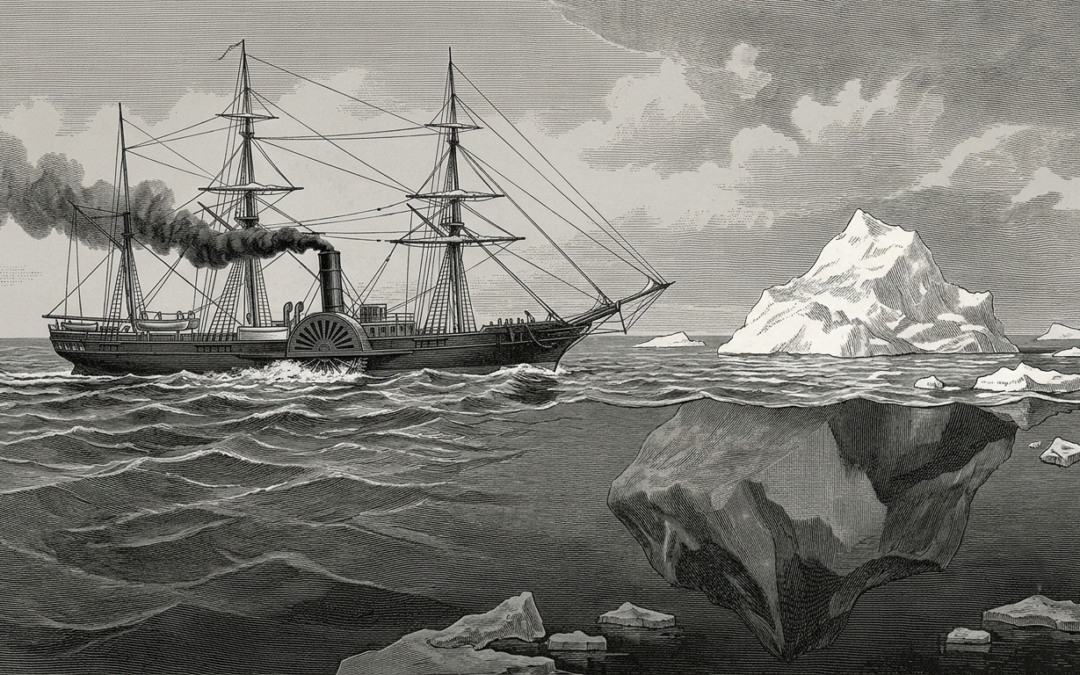
In 1865, English economist William Stanley Jevons published The Coal Question, an examination of Britain’s growing dependence on coal during the Industrial Revolution. At the time, many believed that improving the efficiency of steam engines would naturally reduce coal consumption. If each engine required less fuel to accomplish the same amount of work, total demand should eventually decline.
Jevons reached the opposite conclusion.
As steam engines became more efficient, they also became less expensive to operate. Industries that had never found steam power economical suddenly did. Existing businesses expanded production. New applications emerged. The savings created by greater efficiency were more than offset by the growth that efficiency made possible.
Jevons summarized the idea in a passage that remains remarkably relevant today:
“It is wholly a confusion of ideas to suppose that the economical use of fuel is equivalent to diminished consumption. The very contrary is the truth.”
More than a century and a half later, economists still debate the magnitude of what we now call Jevons Paradox. Some distinguish between modest rebound effects, where efficiency simply reduces the expected savings, and stronger forms in which total consumption ultimately exceeds previous levels. Those distinctions matter in energy economics, but for our purposes they are secondary.
The broader observation has proven remarkably durable. Artificial intelligence appears to be following the same pattern, with each improvement in performance or reduction in cost making entirely new applications economically practical.
Viewed from that perspective, invoking Jevons Paradox in discussions about AI feels entirely reasonable.
The question is whether insurance behaves like the technologies it insures.
The more I considered that question, the clearer it became that we might be conflating two different things. One is that artificial intelligence will make insurance itself cheaper and easier to produce. The second is that AI will make the entire economy more productive, creating more property, contracts, businesses, professional advice, and other forms of exposure requiring financial protection.
At first glance, that may seem like a narrow distinction. I don’t think it is. The first explanation begins with insurance operations. The second begins with the economy insurance exists to serve.
To see why that matters, it helps to consider a concept insurance professionals understand intuitively, even if they rarely describe it in economic terms: derived demand.
Insurance Follows the Economy
Economists describe many products and services as exhibiting derived demand. Simply put, demand for one thing exists because demand already exists for something else.
Steel is an obvious example. We don’t produce steel because society has an inherent appetite for steel. We produce it because someone wants to build a bridge, manufacture an automobile, erect a skyscraper, or lay a pipeline. The demand for steel is derived from the demand for the things steel makes possible.
Insurance behaves much the same way.
Commercial property insurance exists because businesses own buildings, equipment, and inventory. General liability exists because companies interact with customers. Professional liability exists because professionals provide advice. Directors and Officers coverage exists because corporations exist. Cyber insurance exists because businesses became digitally connected. In nearly every major line of business, insurance follows the creation of economic value rather than causing it.
That distinction is easy to overlook because insurance is such a mature industry. We tend to think of it as a permanent feature of the economy, when in reality it has continually evolved alongside the economy it serves.
Consider the automobile.
When Gilbert J. Loomis purchased what is generally recognized as the first automobile insurance policy from Travelers in 1897, there was no meaningful automobile insurance market. There couldn’t be. The market didn’t emerge because insurers suddenly discovered a more efficient way to underwrite automobiles. It emerged because automobiles themselves became commercially important. As millions of vehicles appeared on American roads, an entirely new class of insurable exposure appeared with them.
Commercial aviation followed a remarkably similar path. As aircraft evolved from novelty to viable transportation, insurers, brokers, and reinsurers developed specialized products to support an industry that scarcely existed a generation earlier. The insurance market grew because aviation grew.
Cyber insurance tells much the same story. Early cyber products appeared in the late 1990s, long before they represented a significant line of business. The market matured slowly, not because underwriting technology improved overnight, but because businesses became increasingly dependent on digital systems and the financial consequences of cyber events became impossible to ignore.
History suggests a consistent pattern. Insurance rarely leads technological change. It usually follows it.
Seen against that history, the two mechanisms become easier to separate. AI may directly improve underwriting, claims handling, policy servicing, fraud detection, and customer support. Lower operating costs may produce lower prices, broader availability, new products, and business models that were previously uneconomic. Some version of that effect will almost certainly occur.
The indirect effect may prove more consequential. If AI expands the broader economy, insurance demand grows because the underlying exposure grows. In that sense, AI isn’t increasing demand for insurance directly. It’s increasing the amount of the economy that requires insurance.
This may sound like an academic distinction, but strategy depends on understanding causation. If insurance demand grows primarily because underwriting becomes more efficient, executives should concentrate on operational excellence, distribution, and cost. If demand grows as AI transforms the broader economy, the more important questions become which industries will expand, which new risks will emerge, and which exposures lack mature insurance solutions. Those lead to very different strategic priorities.
That observation doesn’t diminish the importance of artificial intelligence inside insurance operations. AI will almost certainly make underwriting faster, claims handling more efficient, fraud detection more effective, and customer service more responsive. Those improvements matter. They will improve profitability and almost certainly reshape how insurers compete.
But operational efficiency alone has never been the primary engine of insurance demand. The larger opportunity has usually arrived later, after the underlying economy has changed.
If artificial intelligence proves to be a genuine general-purpose technology—on the scale of electricity, computing, or the internet—it is unlikely to expand insurance simply because carriers become more efficient. It will expand insurance because businesses will create new assets, new business models, new contractual relationships, and entirely new categories of liability.
That possibility strikes me as far more consequential than whether underwriting expense ratios decline by another point or two.
Insurance doesn’t become more valuable because it is cheaper to produce.
It becomes more valuable when society creates more things worth protecting.
The conversation, then, probably shouldn’t end with underwriting efficiency. It should begin with the kinds of risks an AI-enabled economy is likely to create.
Looking Beyond Underwriting
None of this should be read as an argument against Jevons Paradox. If anything, artificial intelligence may become one of the strongest modern examples of it. As intelligence becomes less expensive to create and easier to deploy, organizations will almost certainly discover new applications that more than offset the original efficiency gains. AI is already demonstrating that pattern.
The point is simply that insurance occupies a different place in the economic chain.
Artificial intelligence will almost certainly make insurers more efficient. That matters. Better underwriting, faster claims handling, improved fraud detection, and lower operating costs will strengthen individual companies and improve the industry’s ability to compete. Those are meaningful changes. They just may not be the most important ones.
If AI proves as transformative as many believe, the larger story may unfold outside the insurance industry altogether. Productivity gains create new businesses. New businesses accumulate assets. Assets generate contracts, employees, intellectual property, professional services, supply chains, autonomous systems, and liabilities. Each layer of economic activity creates additional exposure, and with that exposure comes demand for risk transfer.
Viewed through that lens, AI doesn’t simply make insurance less expensive to produce.
It creates more of the economy that insurance exists to protect.
That distinction changes where insurers should be looking for opportunity.
The next decade is unlikely to be defined solely by faster underwriting or lower expense ratios. It may be defined by entirely new classes of insurable risk. Agentic AI, autonomous vehicles, robotics, synthetic media, AI-assisted professional advice, algorithmic governance, and machine-to-machine commerce all raise questions that barely existed a few years ago. Some of those risks will prove difficult to insure. Others may become significant new markets. History suggests we should expect both.
Every major technological revolution has eventually produced new insurance products. The automobile transformed personal and commercial lines. Aviation created an entirely new specialty market. Cyber insurance evolved from a niche product into a core commercial coverage as the digital economy matured.
There is little reason to believe artificial intelligence will be different. If anything, the pace of change suggests the opposite.
Which brings us back to the original question.
Does Jevons Paradox apply to insurance?
I think the answer is yes…but not quite in the way it is often presented.
Artificial intelligence will almost certainly increase demand for computing resources. It will almost certainly improve the efficiency of insurance operations. Those direct effects deserve the attention they receive.
But the more consequential effect may be indirect.
As AI expands the economy, the insurance industry expands with it, not because insurance became cheaper, but because society created more things worth protecting.
Coal became more valuable because it became easier to consume.
Insurance becomes more valuable because the economy becomes more valuable to insure.
That is a different mechanism, but perhaps a more useful one for insurance leaders trying to understand where artificial intelligence is most likely to create lasting opportunity.
There is, however, another side to that argument. If AI gives insurers far more underwriting, claims, and servicing capacity without creating a proportionate increase in insurable exposure, efficiency may not expand the market at all. It may compress it—intensifying competition, reducing the value of routine work, and forcing carriers to decide where newly abundant capacity should go.
That is the question I’ll take up in our next article.
Recommended Reading
This article is Part 1 of The Economics of AI in Insurance.
- Part 1: Insurance Isn’t Coal: Why Jevons Paradox Doesn’t Quite Fit Insurance
- Part 2: What Happens When Underwriting Gets Cheap?
- Part 3: The Coming AI Questions for Reinsurers
Sources
William Stanley Jevons
- William Stanley Jevons, The Coal Question (1865). Liberty Fund edition.
The Coal Question (Liberty Fund)
Insurance Economics
- Rudolf Enz, “The S-Curve Relation Between Per-Capita Income and Insurance Penetration,” The Geneva Papers on Risk and Insurance (2000). An accessible abstract is available through EconPapers.
The S-Curve Relation Between Per-Capita Income and Insurance Penetration - Peter Haiss & Kjell Sümegi, “The Relationship Between Insurance and Economic Growth,” Empirica (2008).
- David Mayers & Clifford W. Smith Jr., “On the Corporate Demand for Insurance,” Journal of Business (1982).
Economics & Rebound Effects
- Blake Alcott, “Jevons’ Paradox,” Ecological Economics (2005).
- Harry Saunders, “The Khazzoom-Brookes Postulate,” The Energy Journal (1992).
- Steve Sorrell, The Rebound Effect, UK Energy Research Centre (2007).
Artificial Intelligence
- Alexandra Sasha Luccioni et al., “From Efficiency Gains to Rebound Effects: The Problem of Jevons’ Paradox in AI’s Polarized Environmental Debate,” FAccT 2025.
FAccT 2025 Paper (PDF) - Rajesh P. Narayanan & R. Kelley Pace, “Will Neural Scaling Laws Activate Jevons’ Paradox in AI Labor Markets? A Time-Varying Elasticity of Substitution (VES) Analysis” (2025).
arXiv Preprint
Standards & Governance
Author’s Note: This article draws upon established research in economics and insurance while proposing a different way of thinking about AI’s long-term impact on insurance demand. Any errors in interpretation are, of course, my own.
AI Disclaimer: This content was created with assistance from artificial intelligence technology. While content is based on factual information from the source material, readers should verify all details directly with the respective sources before making business decisions.
